Historical Magical: A Handwritten Typeface for Authentic Brand Identity
I opened a blank brand board on my screen, staring at the empty canvas where a new boutique skincare line needed its voice. The client wanted something that felt organic, slightly vintage, and undeniably personal. They didn't want the sterile perfection of a modern sans serif or the rigid formality of a traditional serif font. They wanted magic, but they needed it to be legible enough to read on a small product label. That was when I decided to test Historical Magical.
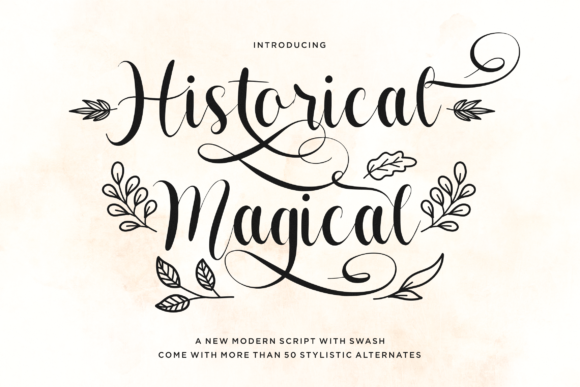
It is an enchanting handwritten font that immediately brings a sense of warmth to any project. As I dragged the type onto the mockup, the difference was instant. Unlike many script fonts that feel stiff or overly digital, this one captures the fluid motion of a real pen moving across paper. It is a versatile script font with a wide spectrum of applications ranging from greeting cards to headlines, making it a powerful addition to any designer's toolkit.
The Personality of Historical Magical in Real-World Design
When you first look at Historical Magical, you notice the character in every stroke. It isn't just a collection of letters; it feels like a story being told. The variable weights and natural irregularities give it a premium font status that stands out in crowded marketplaces. In my testing, I used it for a logo concept for a local coffee roaster. The goal was to evoke the feeling of a handwritten note left on a table by a friend.
The font performed beautifully as a display font. When scaled up for the main logo mark, the swashes and ligatures created a cohesive visual rhythm. However, unlike some decorative typefaces that demand attention, this one invites the viewer in. It strikes a balance between artistic flair and commercial viability. For a brand identity project, this is crucial. You need a font that says "handcrafted" without sacrificing professionalism. Historical Magical manages to walk that line perfectly, adding a touch of whimsy to a serious business card or a playful element to a corporate welcome page.
Performance Across Different Media
I took the design further by placing the font on various assets to see how it held up. On a packaging mockup for a handmade soap bar, the text looked crisp and inviting. The curves of the letters complemented the organic shape of the bottle without looking cluttered. This is often a struggle with script fonts; they can easily become illegible when wrapped around a curved surface or printed on textured paper. But the kerning and spacing in Historical Magical are well-balanced, ensuring readability even at smaller sizes.
Moving to digital spaces, I tested it on a website header and social media graphics. As a headline font, it commands attention without overwhelming the layout. It pairs exceptionally well with a clean sans serif font for body copy, creating a modern typography system that feels both fresh and timeless. On Instagram posts, the font adds a layer of authenticity that users crave. It signals that there is a human behind the brand, which is essential for building audience engagement in today's digital landscape.
- Logo Design: Excellent for custom wordmarks and monograms where uniqueness is key.
- Packaging Design: Ideal for labels, tags, and wrapping paper where a tactile feel is desired.
- Social Media Graphics: Perfect for quotes, announcements, and promotional banners.
- Editorial Design: Works well for drop caps, pull quotes, and section headers in magazines or blogs.
Practical Considerations and Limitations
No single typeface is a silver bullet, and Historical Magical has its specific boundaries. While it shines as a creative font for short phrases and accents, it is not designed for long body text. The intricate details and varying stroke widths can cause eye strain if used for paragraphs of copy. Therefore, it should be treated primarily as a supporting typeface or a decorative font for emphasis.
For formal corporate use, such as legal documents or financial reports, this font might feel too casual. It lacks the neutral gravity required for high-stakes business communication. Instead, it excels in creative industries, lifestyle brands, and artisanal products. If you are designing for a law firm or a bank, you would likely find a more structured serif font or a geometric sans serif more appropriate. But for a bakery, a craft studio, or a wellness brand, the personality of Historical Magical is exactly what the brief calls for.
Another important aspect is the technical implementation. The font is PUA encoded, which means it includes a wide range of special characters and glyphs that standard Unicode might miss. This is a game-changer for designers who need specific symbols or alternate letterforms to complete a unique design asset. It allows for greater flexibility in logo design and brand identity projects where standard fonts fall short.
Pairing and Implementation Strategy
To get the most out of this typeface, pairing is everything. Because Historical Magical is so expressive, it needs a partner that provides stability. A classic serif font works wonders for editorial layouts, adding a touch of tradition to the magical feel of the script. Alternatively, a modern sans serif font creates a striking contrast that feels contemporary and chic. This combination ensures that your brand remains readable while maintaining its distinctive character.
Before committing to a final client project, I always recommend testing the font in context. Try setting it on a business card, a poster, and a web button. Check how it looks in black and white versus color. Does it maintain its integrity when resized? Historical Magical generally handles scaling well, but always verify the legibility on mobile devices, especially for social media graphics where screen sizes vary wildly.
Finally, remember to review the included styles, alternates, and ligatures. The richness of this script font lies in its variety. Using different alternates can prevent repetition and add a layer of sophistication to your design. Whether you are working on a wedding invitation, a product label, or a creative studio identity, taking the time to explore these options will elevate the final result.
As a designer who values both aesthetics and functionality, I found Historical Magical to be a reliable and inspiring tool. It brings a human touch to digital and print media, bridging the gap between the past and the present. Just ensure you check commercial font licensing before using it in client work, brand identity packages, or merchandise, as proper usage rights protect both you and your clients. With the right application, this font can transform a simple design into a memorable brand experience.